How Pakistani Deep-Pressure Therapy Helps Body Comfort at a Massage Center in Ajman

Every working week in the UAE leaves a physical record on your body.
Hours at a desk, a long commute from Sharjah, a shift that runs well past midnight — each one adds a layer of tension that accumulates in predictable zones: the neck, the upper back, the tops of the shoulders, and the lower lumbar. Most people try to manage this with rest. Rest helps, but it does not release the structural tension that builds in muscle tissue over weeks. That requires targeted pressure applied by someone who knows exactly where to work and how.
Pakistani deep-pressure therapy is one of the most effective approaches for exactly this pattern of tension. This post explains what the therapy involves, why it works physiologically, who it is most suited to, and what to look for in a massage center in Ajman before you book it.
Why Targeted Pressure Therapy Is Growing in Demand Across the UAE in 2026
The International Spa Association’s 2026 Global Wellness Report identified targeted deep-pressure work as the fastest-growing therapy category across the Gulf region, with a 34% year-on-year increase in bookings recorded between 2024 and 2025. The driver is consistent: sedentary work patterns combined with the physical demands of long commuting routes.
Ajman and the northern emirates have a particularly high concentration of shift workers, transportation professionals, and construction sector employees — populations where sustained physical loading on the back, shoulders, and lower body creates cumulative tension that lighter massage approaches cannot adequately address.
The pattern is well-documented. Chronic tension in the trapezius, rhomboid, and lumbar regions does not self-resolve through rest alone. Muscle fibres that have been under sustained load contract and remain partially contracted, creating the persistent tightness that many people describe as ‘always there’ regardless of how much sleep they get.
Structured deep-pressure work — applied by a trained specialist who understands where tension concentrates and how to release it progressively — addresses the physical cause, not just the sensation. This is what has driven the shift toward modality-specific booking in Ajman’s wellness market through 2026.
What Pakistani Therapy Actually Involves: Technique, Pressure, and Body Zones
Pakistani deep-pressure massage is a therapeutic modality developed from South Asian bodywork traditions. It is distinct from general oil massage in both technique and intent. Where most relaxation-focused sessions use rhythmic, lighter strokes across the full body, Pakistani therapy applies firm, sustained pressure to specific muscle groups — working progressively deeper into tissue rather than staying at surface level.
Pressure mechanics
The therapist uses the heel of the hand, knuckle ridges, and thumb pads rather than the flat palm. This allows significantly higher pressure concentration per square centimetre than a standard massage hand position. The result is that tissue at a depth of 2–3 cm receives direct therapeutic pressure, which is where the majority of chronic tension is held in overworked muscle groups.
Primary treatment zones
Pakistani therapy concentrates on the cervical spine and upper trapezius (the neck-to-shoulder line most affected by screen work), the rhomboid and mid-back region (often tight from sustained driving or seated posture), and the lumbar erectors (the lower back muscles that absorb the most load from standing work and heavy commutes). A full session covers all three zones systematically.
Oil use and session structure
Unlike Kerala Ayurvedic or Indian oil massage, Pakistani therapy uses minimal oil. The therapist requires direct contact with the skin to apply effective pressure — excessive oil reduces friction and undermines the depth of the technique. Sessions typically run 60 to 90 minutes, with the first 15 minutes used to assess tension distribution before the targeted work begins.
Physiological mechanism
The sustained pressure applied during a Pakistani session triggers the myotatic stretch reflex in contracted muscle groups, forcing a release cycle that passive rest cannot produce. This is accompanied by increased local blood flow, which clears metabolic waste products from chronically tight tissue and reduces the inflammatory markers that contribute to persistent soreness.
Pakistani Therapy at Jameela Spa: What the Structure Looks Like
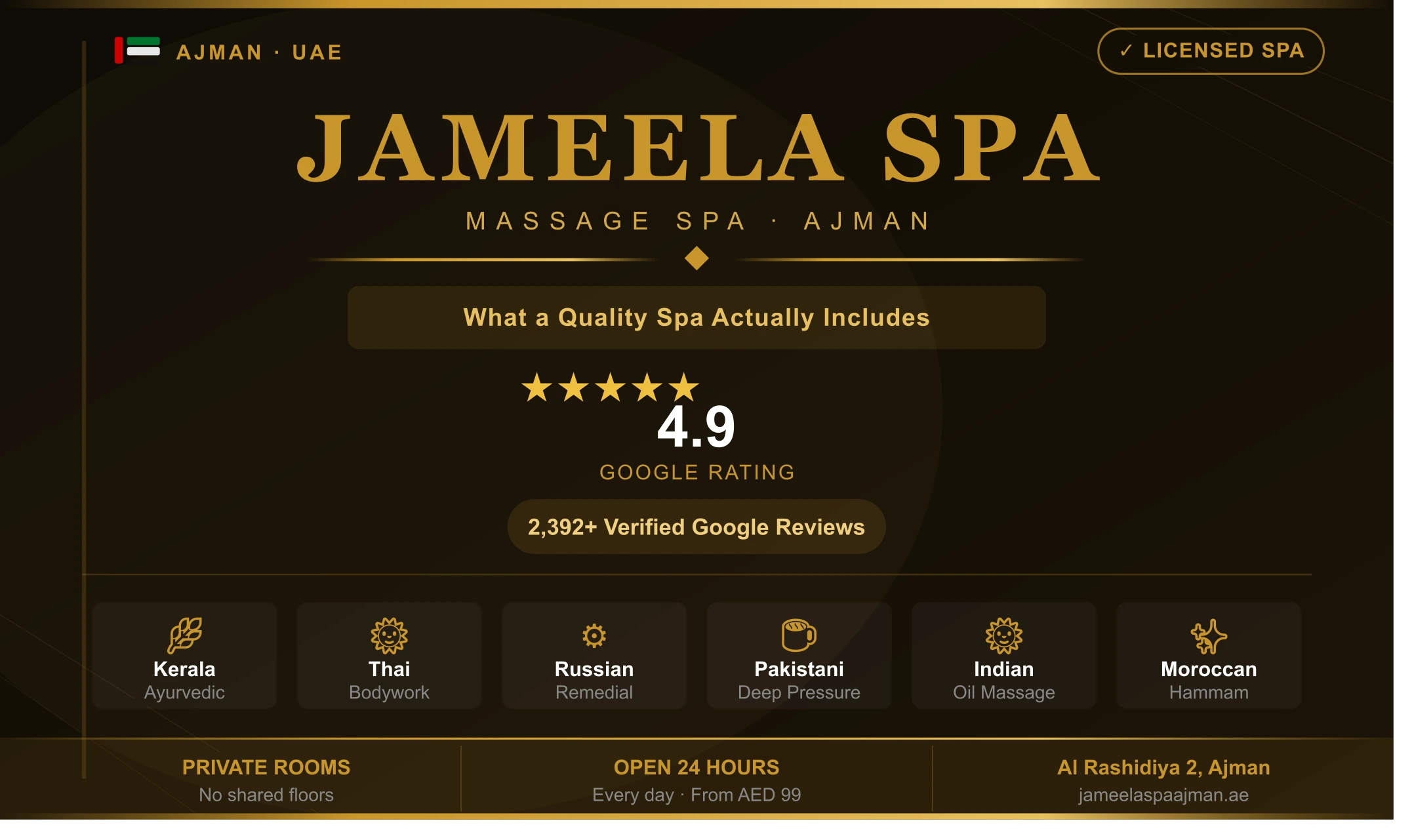
At Jameela Spa in Al Rashidiya 2 — a fully licensed massage center in Ajman operating since 2018 — Pakistani deep-pressure therapy is delivered by therapists who work exclusively in this modality. They do not rotate between treatment types based on availability.
This matters because Pakistani therapy requires a level of anatomical familiarity with tension distribution patterns that takes years of specialised practice to develop. A therapist who has worked only this modality for three or four years reads a guest’s body differently from one who switches between five treatment types across a working week. The pressure calibration, zone sequencing, and depth progression of the session reflect that accumulated experience.
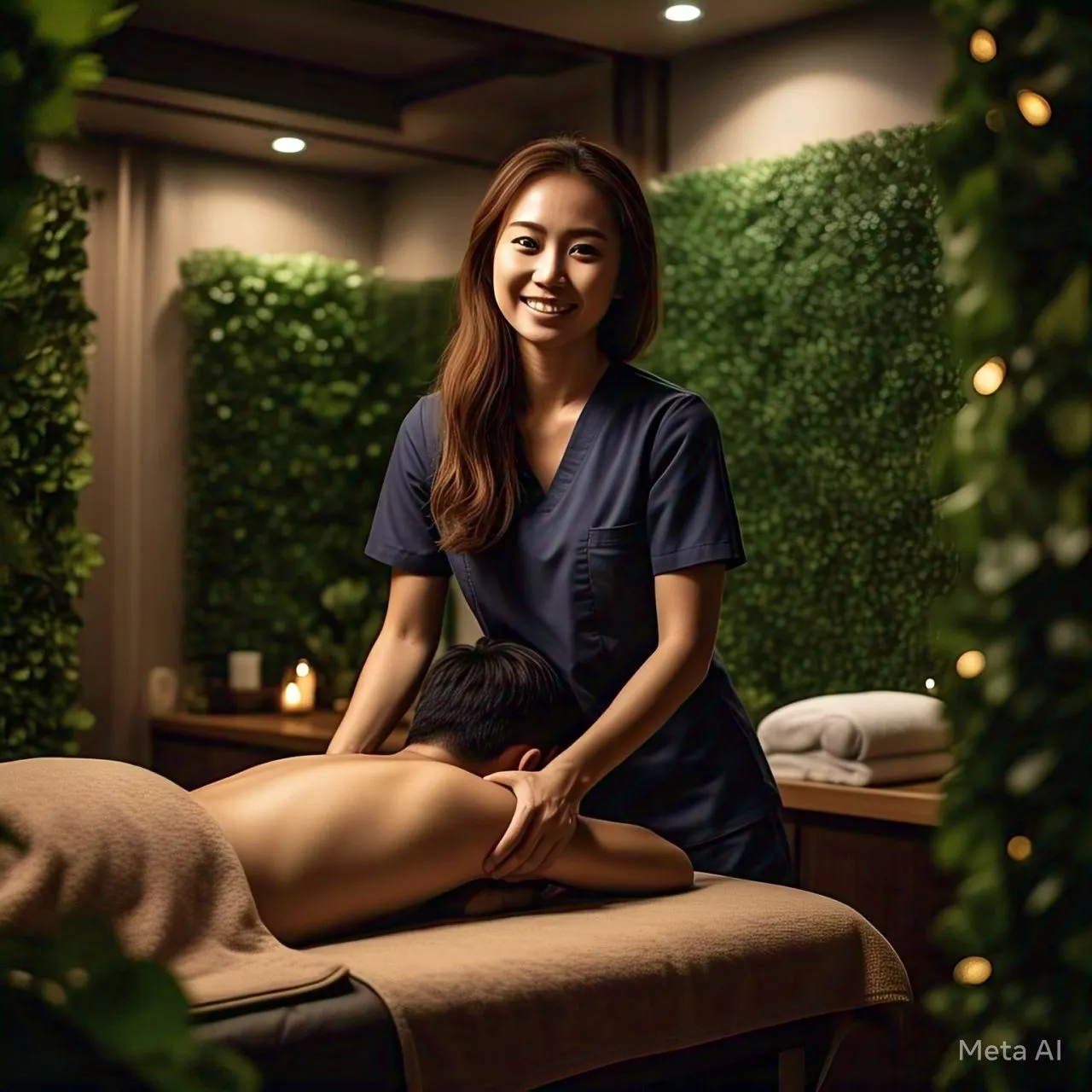
Each session at Jameela Spa begins with an intake — a brief conversation about where tension is concentrated and whether any areas require adjusted pressure (recent injury, referred pain, specific complaint). The room is private, individually prepared with fresh linen, and reset fully between every guest.
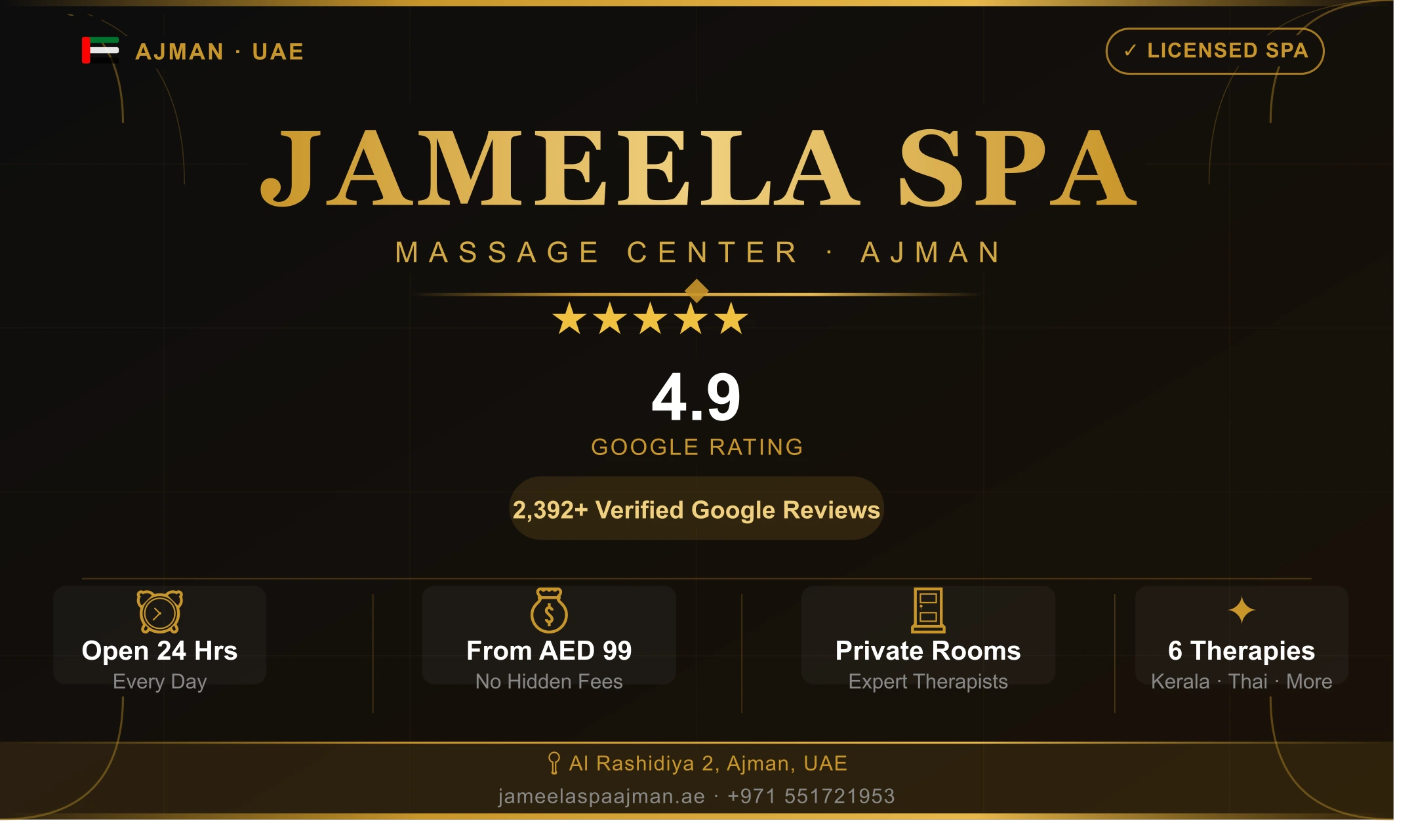
The 4.9★ rating across 2,392 verified Google reviews, sustained over eight years of operation, reflects what happens when this level of structural consistency is maintained across every session. If you are coming from Sharjah, the facility in Al Rashidiya 2 is approximately 8 minutes from Al Nahda — making it a practical option that many guests from a Sharjah massage center search end up choosing for its specialist structure and 24-hour availability.
Also Available Across Ajman: Chandini Rath Spa
For residents in other parts of Ajman, Pakistani deep-pressure therapy is also available at Chandini Rath Spa — a partner wellness center near Falcon Tower that shares the same operational principles as Jameela Spa: specialist therapists, 24-hour access, private rooms, and sessions starting from AED 99. Chandini Rath has operated continuously since 2011, with a certified team of over 50 registered therapists each trained in their native healing tradition.
Both centres approach Pakistani therapy the same way: one therapist per modality, a structured intake before the session begins, and pressure calibrated to the individual guest rather than applied to a fixed routine. If you are located closer to Falcon Tower than to Al Rashidiya 2, Chandini Rath Spa at chandinirathspa.com offers the same therapy standard at the nearest available location.
Pakistani Therapy vs Other Modalities: Choosing the Right Approach
Not every tension pattern calls for deep-pressure work. Understanding how Pakistani therapy compares to the other modalities at Jameela Spa helps you choose the session that matches your actual condition.
| Therapy | Pressure level | Best suited for |
| Pakistani Deep-Pressure | Firm — concentrated | Chronic neck, shoulder, back tension — targeted zone release |
| Russian Remedial | Firm — structured | Specific muscle groups, lower back complaints |
| Thai Bodywork | Moderate — stretch-based | Postural stiffness, limited mobility from desk work |
| Kerala Ayurvedic | Light to moderate — rhythmic | Deep fatigue, stress, disrupted sleep |
| Indian Oil | Light — broad coverage | General recovery, new guests, circulation |
| Moroccan Hammam | Surface — exfoliating | Skin reset, detoxification, circulation |
If your primary complaint is concentrated in the neck, shoulder, or lumbar region, and you experience it consistently rather than occasionally, Pakistani therapy is the most direct option. If your tension is more diffuse — general fatigue, poor sleep, or overall body heaviness — a lighter modality may serve you better as a starting point.
Before You Book Pakistani Therapy at Any Spa in Ajman: Five Checks
The quality of a deep-pressure session depends heavily on the therapist’s training and the facility’s operational standard. These five checks protect you from booking a session that does not deliver what Pakistani therapy is capable of.
Therapist specialisation. The person delivering your session should work exclusively in deep-pressure or Pakistani modality — not rotate between multiple treatments. Ask directly.
Session intake protocol. A quality facility assesses your tension zones and adjusts pressure calibration before the session begins — not during, and not based on guesswork.
Private room. Deep-pressure work requires genuine privacy. Shared floors or curtained spaces are not adequate for this modality.
Municipal licensing. Any spa in Ajman offering therapeutic massage should hold a current Ajman Municipality licence. Ask for the registration number.
Post-session guidance. A trained therapist will advise on hydration, rest, and any follow-up session timing. This indicates clinical awareness, not just service delivery.
Practical Details
| Location | Villa No. 7, 18 Ammar Bin Yasir Street, Al Rashidiya 2, Ajman, UAE |
| Access | 5 min from Ajman City Centre · 8 min from Sharjah Al Nahda · Near Nesto Hypermarket |
| Pakistani Therapy | Available 24 hours, every day — walk-ins welcome at any hour |
| Pricing | From AED 99 per session — one flat rate, no surge pricing |
| All Therapies | Kerala Ayurvedic · Thai · Russian · Pakistani · Indian Oil · Moroccan Hammam |
| Booking | Call or WhatsApp +971 551721953 — no form, no app required |
| Parking | Free on-site — no time limit during your session |
| Licence | Ajman Municipality licensed since 2018 |
| Rating | 4.9★ across 2,392+ verified Google reviews |
Frequently Asked Questions
Q: What is Pakistani massage and how is it different from regular massage?
A: Pakistani deep-pressure therapy applies firm, concentrated pressure to specific muscle groups — particularly the neck, upper back, and lumbar region — using the heel of the hand and thumb pads rather than a flat-palm stroke. It targets deeper tissue layers than general relaxation massage and requires minimal oil. The technique is suited to chronic tension zones, not general unwinding.
Q: Is Pakistani therapy available at a massage center in Ajman?
A: Yes. Jameela Spa in Al Rashidiya 2 offers Pakistani deep-pressure therapy 24 hours a day, every day. The session is delivered by a therapist who works exclusively in this modality — not a generalist rotating between treatment types.
Q: How many sessions of Pakistani massage do I need to see results?
A: Most guests report noticeable tension reduction after a single session. For chronic tension that has built over weeks or months, two to three sessions across a fortnight typically produces a more sustained result. Your therapist can advise on a session schedule during the intake conversation.
Q: Is Pakistani massage suitable for lower back pain?
A: Yes. The lumbar erector muscles are one of the primary treatment zones in Pakistani deep-pressure therapy. Sustained firm pressure to this region releases the structural tension that contributes to persistent lower back discomfort. If your pain has an underlying clinical cause, consult a physician alongside booking a therapeutic session.
Q: How far is Jameela Spa from Sharjah?
A: Jameela Spa in Al Rashidiya 2, Ajman is approximately 8 minutes from Al Nahda, Sharjah. Many guests searching for a Sharjah massage center choose Jameela Spa for its specialist therapist structure, 24-hour access, and transparent AED 99+ pricing.
Chronic body tension does not resolve on its own. The structural muscle tightness that accumulates through sustained work, commuting, and disrupted rest requires targeted therapeutic intervention — and Pakistani deep-pressure therapy is one of the most effective tools for exactly this pattern.
At Jameela Spa, the combination of a specialist therapist, a properly prepared private room, and a consistent 24-hour operating standard means the session is available when you need it and delivers at the standard it should. Explore the full therapy options at our massage spa in Ajman — or simply walk in to Villa No. 7, Al Rashidiya 2, any time of day or night.
| Walk in any time. No appointment needed. +971 551721953 · WhatsApp · Open 24/7 · From AED 99 Villa No. 7, Al Rashidiya 2, Ajman · jameelaspaajman.ae |
Published by Hira — Wellness Director, Jameela Spa Ajman | June 2026 | jameelaspaajman.ae