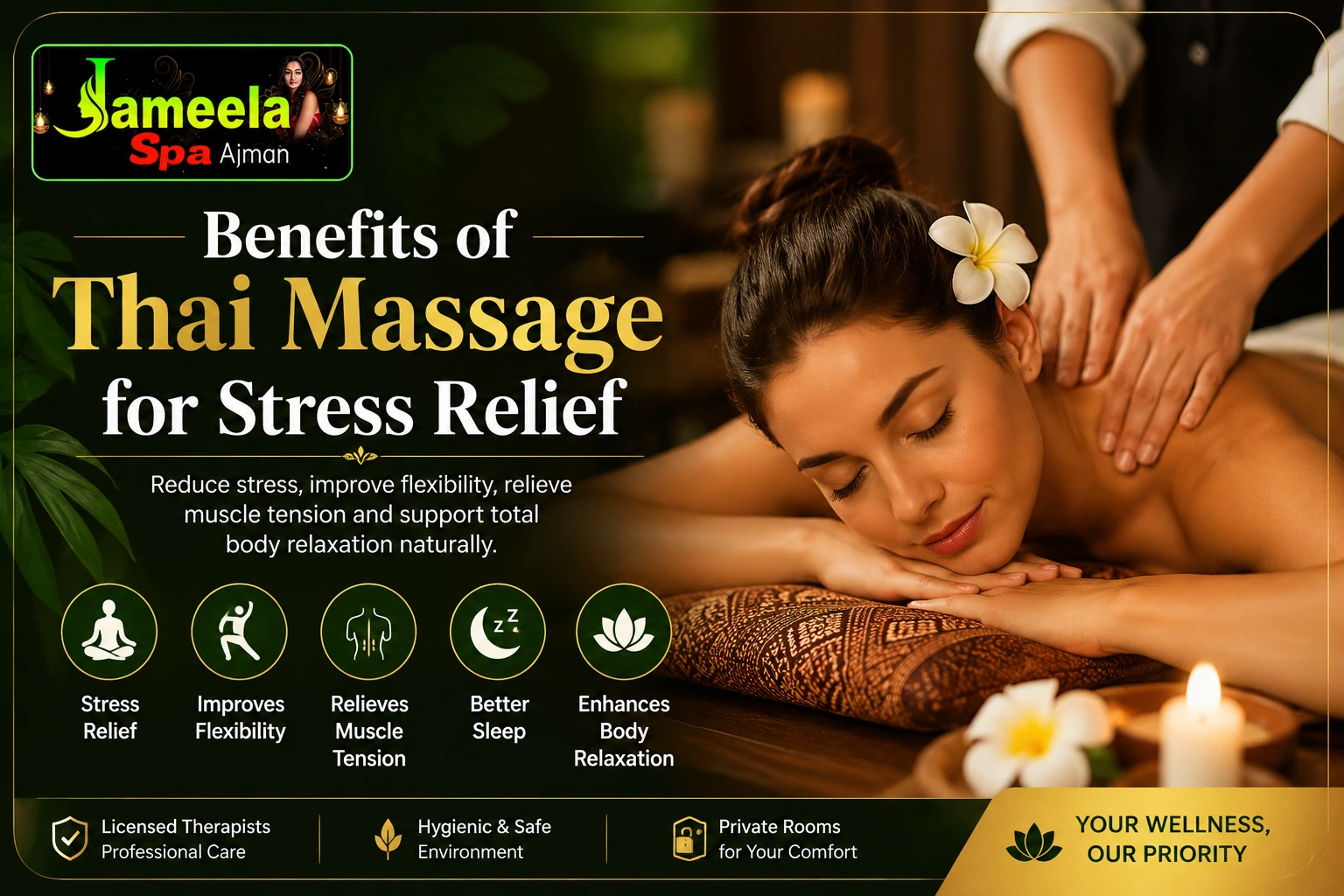
Benefits of Thai Massage for Stress Relief

Daily stress can affect more than just the mind. Long working hours, repetitive movement, poor posture, and limited physical recovery can slowly create muscle tightness, body fatigue, poor sleep, and discomfort in areas like the neck, shoulders, back, and legs. Over time, this physical tension may also affect flexibility, mobility, and overall comfort.
Many people search for natural wellness therapies that may help support both relaxation and body recovery without relying only on temporary solutions. Thai massage is widely known as a movement-based therapy that combines assisted stretching, controlled pressure, and guided body positioning. It is often chosen by individuals looking to improve flexibility, reduce muscle stiffness, and support stress relief in a safe and professional setting.
Understanding how Thai massage may help can make it easier to choose suitable recovery options based on personal body needs and overall wellness goals.
How Thai Massage Helps Support Stress Relief
Stress often builds inside the body physically before people fully notice it mentally. Tight shoulders, neck discomfort, back stiffness, headaches, and reduced mobility can all be linked to long-term physical tension.
Thai massage benefits may come from a combination of stretching and targeted pressure that helps the body relax while encouraging improved movement.
This type of therapy may support:
Reduced muscle tightness
Better circulation
Lower body tension
Improved flexibility
Natural stress recovery
Full body comfort
Better mobility support
As the body becomes more relaxed, it may also help reduce the physical heaviness often caused by repetitive work, poor posture, or long hours of sitting.
Why Stress Relief Matters for Overall Wellness
Stress does not always appear as emotional pressure alone. It can create physical strain that affects daily comfort and movement.
When body tension remains for long periods, people may experience:
Poor sleep
Body fatigue
Neck and shoulder tightness
Lower back discomfort
Reduced flexibility
Difficulty sitting or standing comfortably
Posture imbalance
A stress relief massage can support body recovery by helping muscles relax and reducing stiffness in commonly affected areas.
Better Sleep Support
Physical tension may affect how comfortably the body rests. Tight shoulders, lower back strain, and neck discomfort can interrupt healthy sleep patterns. Relaxation-focused therapy may help support better sleep by improving overall body comfort.
Body Fatigue Recovery
Many people experience fatigue after long shifts, travel, repetitive movement, or limited stretching. Recovery-focused massage therapy may help reduce body heaviness and improve relaxation.
Improved Daily Comfort
When muscles are less tight, normal movement such as walking, stretching, bending, or standing for long periods may feel easier.
Signs Your Body May Need Recovery Therapy
Sometimes the body gives early signs that recovery support may be helpful.
Common signs include:
Tight shoulders after work
Neck stiffness
Lower back discomfort
Limited flexibility
Frequent body heaviness
Muscle tightness after sitting long hours
Poor posture-related strain
Tired legs after physical activity
Reduced comfort while sleeping
These issues may not always require medical treatment, but professional body recovery support may help improve comfort and mobility.
Who May Benefit from Thai Massage?
Thai massage is often chosen by people experiencing physical stress or reduced movement.
It may support individuals who:
Office Workers
Sitting for long hours may create posture tension, shoulder tightness, and hip stiffness.
People with Physically Demanding Jobs
Standing, lifting, or repetitive movement can create muscle fatigue and body strain.
Individuals with Limited Flexibility
Stretch-based therapy may help improve controlled movement and body mobility.
People Recovering from Daily Stress
Those dealing with physical stress buildup may choose guided recovery-focused wellness therapy for better relaxation.
Thai Massage and Flexibility Improvement
Flexibility plays a major role in healthy movement and posture.
Tight muscles around the hips, legs, shoulders, and spine may reduce mobility over time. Thai massage often includes assisted stretching that may help reduce stiffness while supporting natural flexibility improvement.
Possible benefits may include:
Improved joint movement
Better posture support
Reduced stiffness after work
Easier body movement
Better mobility in daily activities
Lower posture strain
People with repetitive desk work often experience shortened muscles and restricted movement. Stretch-focused therapy may support body balance when combined with healthy movement habits.
Thai Massage vs Standard Relaxation Massage
Many people ask about the difference between these therapy styles.
Thai Massage
Often focuses on:
Assisted stretching
Pressure techniques
Guided body movement
Flexibility support
Posture tension relief
Muscle stiffness reduction
Standard Relaxation Massage
Usually focuses on:
Gentle surface pressure
Muscle calming
Soft relaxation
Stress comfort
General body relaxation
Both may support wellness. The better option often depends on whether the body needs stretching, mobility support, or soft relaxation.
Some people exploring broader wellness services may choose different therapies depending on recovery goals.
What to Expect During a Professional Thai Massage Session
Knowing what happens during a session can help first-time visitors feel more comfortable.
- Body Assessment
A therapist may ask about stiffness, tension, posture strain, or areas of discomfort.
- Controlled Pressure Work
Gentle pressure may be applied to targeted body areas.
- Assisted Stretching
The body may be guided into controlled stretches to support flexibility and comfort.
- Relaxation Support
Breathing and body positioning may help improve calmness during therapy.
- Recovery Guidance
Professional sessions may include simple body-care suggestions such as stretching or hydration support.
Choosing therapy sessions with experienced therapists may improve safety and comfort.
Why Safe Therapy Environment Matters
Wellness therapy is not only about technique. The environment also plays a role in comfort and trust.
People often value:
Hygiene
Licensed therapists
Safe environment
Calm atmosphere
Therapist experience
Body-care awareness
Private spa rooms
Professional wellness care often feels more supportive when both comfort and safety are prioritized.
Choosing hygienic and well-managed professional treatments can support better long-term body care.
Frequently Asked Questions
Is Thai massage good for stress relief?
It may help reduce physical tension, improve flexibility, and support overall body relaxation.
Can Thai massage help neck and shoulder tightness?
Pressure techniques and assisted stretching may support relief in these common tension areas.
Does Thai massage improve flexibility?
It often helps support flexibility and mobility through guided stretching.
Is Thai massage suitable for body fatigue recovery?
Many people use it as part of body recovery support after work strain or physical stress.
How often should someone choose Thai massage?
This depends on body condition, activity level, and personal wellness needs.
Conclusion
Thai massage can be a valuable recovery-focused therapy for individuals experiencing stress, body fatigue, poor flexibility, muscle stiffness, or posture-related discomfort. Its combination of assisted stretching, controlled pressure, and movement-based support may help improve relaxation, mobility, and overall body comfort.
For people seeking natural ways to improve recovery and reduce physical stress, Thai massage may be a supportive part of a balanced wellness routine. Choosing professional care in a clean and calm setting can help improve both comfort and confidence during therapy.